

Coordonnées :
+86 17852488518

Product Overview
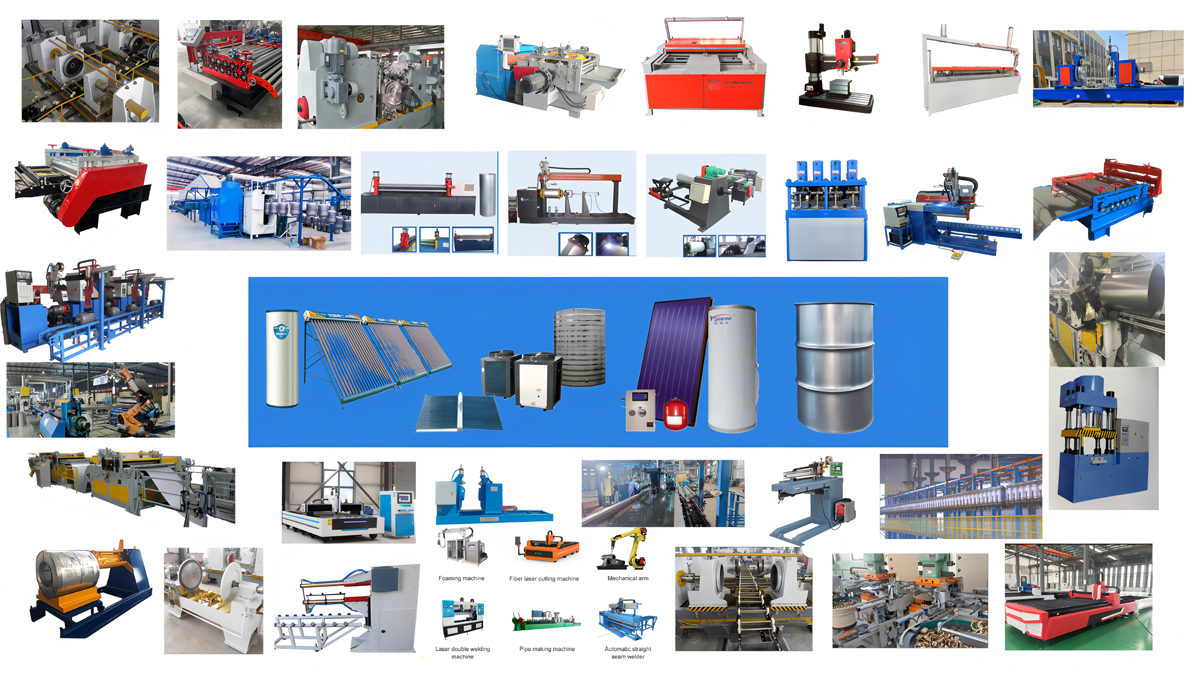
The sealing machine for Steel Drum Production Lines is a key piece of equipment used for pressing, rolling, and sealing steel drum lids and bodies. It is suitable for sealing 200L steel drums, chemical drums, oil drums, lubricating oil drums, and various metal packaging containers. The equipment adopts a stable mechanical transmission or hydraulic drive structure and is equipped with an automatic positioning, pressing, and sealing control system. It can adjust the sealing pressure, processing speed, and forming parameters according to different drum types and production requirements to ensure uniform edge rolling, firm connection, and good sealing performance. The entire machine can be configured with a PLC automatic control system and can be connected to conveying devices, seam welding machines, flanging machines, rib rolling machines, and testing equipment for continuous and automated production. The equipment features high sealing accuracy, stable operation, simple operation, and convenient maintenance, and can meet the needs of steel drum production lines with different production capacity levels.


You know what I've noticed over the years? Most steel drum factory managers spend 80% of their time worrying about the
welding and forming machines, and maybe 10% on the seamer. And that's backwards. The seaming machine is the last
piece of equipment your drum touches before it goes out the door. If it makes a mistake, there's no second chance. No
rework. No fixing it later. That drum is either sealed or it's scrap. And that's why I always tell people to treat their steel drum
closing machine with the same respect they give the most expensive machine on their line.
The seaming machine attaches the lid to the drum body by rolling the two edges together into a tight, interlocked joint. The
process is called double seaming, and it uses two sets of rollers. The first operation roller hooks the lid edge around the
body flange, and the second operation roller compresses that hook into a tight, five-layer seam. When it's done right, that
seam is strong enough to hold the drum together even when it's dropped from a height or stacked four high. When it's done
wrong, you get leaks. The key factor in seam quality is the seaming roller profile. Over time, the rollers wear down and lose
their precise shape. As the profile changes, the seam thickness increases, and the leak rate goes up. That's why regular
maintenance and roller replacement are critical.
Here's something a lot of people don't think about: the seaming compound. That sealant applied to the lid before seaming
fills the microscopic gaps between the steel layers. If the compound isn't applied evenly or if the machine runs out of
compound mid-shift, you'll get leaks even if the seam looks perfect. Modern seamers use a glue injection system that
applies the compound automatically, and some even have low-level sensors that warn the operator before the compound
runs dry. That's a feature worth looking for.
When you're choosing a seamer, there are three big decisions. First, single-sided vs. double-sided. A single-sided seamer
works on one end at a time. It's cheaper and easier to maintain. A double-sided seamer works both ends simultaneously.
It's faster and more consistent. For high-volume production, the double-sided is the better investment. Second,
semi-automatic vs. fully automatic. A semi-automatic seamer requires an operator to place the lid and start the cycle. A fully
automatic seamer handles everything without manual intervention. Third, the seaming roller material. For high-volume
production, rollers made from tool steel with a specialized coating last much longer than standard rollers. Look for rollers
that are designed to be reground rather than replaced—it's more cost-effective in the long run.
Here's a practical tip from my own experience: always run a seam thickness check at the start of every shift. Take a finished
drum, cut a section out of the seam, and measure the thickness with a caliper. Compare it to your standard. If it's within
tolerance, you're good to go. If it's not, adjust your rollers before you run a batch of bad drums. And keep a log of seam
thickness measurements over time—it'll help you spot trends and schedule maintenance before problems develop.
Your Steel Drum Sealing Machine is the last line of defense between a good drum and a leaking one. Treat it with the respect
it deserves. Keep your rollers in good shape, check your seam thickness regularly, and never let your glue run dry. Your
customers will thank you with repeat orders.


Ce site Web utilise des cookies pour vous garantir la meilleure expérience sur notre site Web.


 English
 Español
 Pусский
 العربية



 Téléphone